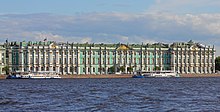
Hermitage Museum

Spb 06-2012 Palace Embankment various 14.jpg
 Of six buildings of the main museum complex, five, named the Winter Palace, Small Hermitage, Old Hermitage, New Hermitage and Hermitage Theatre, are open to the public. The entrance ticket for foreign tourists costs more than the fee paid by citizens of Russia and Belarus. However, entrance is free of charge the first Thursday of every month for all visitors, and free daily for students and children. The museum is closed on Mondays. The entrance for individual visitors is located in the Winter Palace, accessible from the Courtyard.

Comments

Popular posts from this blog

iPhone 6s and iPhone 6s Plus Review

For most of the reviews here at Gadgets 360, we use the mobile in question as our primary phone for about a week or so before sharing our verdict with you. We realise this isn't perfect, since there are some aspects of the device that don't become obvious during that time, and in an ideal world, we'd use every phone for a couple of months before we publish our review. But we work under constraints where most devices aren't available to us for that long - almost all products that we review are loaned to us by companies for short durations - and there's also the competitive pressure of wanting to get your review out before others do, as long as it doesn't involve cutting any corners. With the launch of iPhone 6s and iPhone 6s Plus in India, Apple offered to loan the two new iPhones to Gadgets 360 - and indeed other publications - for more than the typical timeframe of a few days. The India iPhone launch of course came a few we...

MEDITATION: History

From East to West Although there’s a paucity of recorded history on meditation, its roots travel back to ancient times. Researchers speculate that primitive hunter-gatherer societies may have discovered meditation and its altered states of consciousness while staring at the flames of their fires. Over thousands of years, meditation evolved into a structured practice. Indian scriptures called “tantras” mentioned meditation techniques 5000 years ago. Buddha, “one of history’s major proponents of meditation,” (meditationcenter.com) and a major meditation icon, first made his mark around 500 B.C. His teachings were spread far and wide across the Asian continent. Separate countries or cultures adopted different forms of the word “meditation,” and they each found their own unique way of practicing it. Buddhist- and Hindu-based Easter-style meditation practices are still the most popular today. Meditation was spread to Western society thousands of years after it...

The birth of the web

Tim Berners-Lee, a British scientist at CERN, invented the World Wide Web (WWW) in 1989. The web was originally conceived and developed to meet the demand for automatic information-sharing between scientists in universities and institutes around the world. The first website at CERN - and in the world - was dedicated to the World Wide Web project itself and was hosted on Berners-Lee's NeXT computer. The website described the basic features of the web; how to access other people's documents and how to set up your own server. The NeXT machine - the original web server - is still at CERN. As part of the project to restore the first website, in 2013 CERN reinstated the world's first website to its original address. On 30 April 1993 CERN put the World Wide Web software in the public domain. CERN made the next release available with an open licence, as a more sure way to maximise its dissemination. Through these actions, making the software required to run a web server fre...